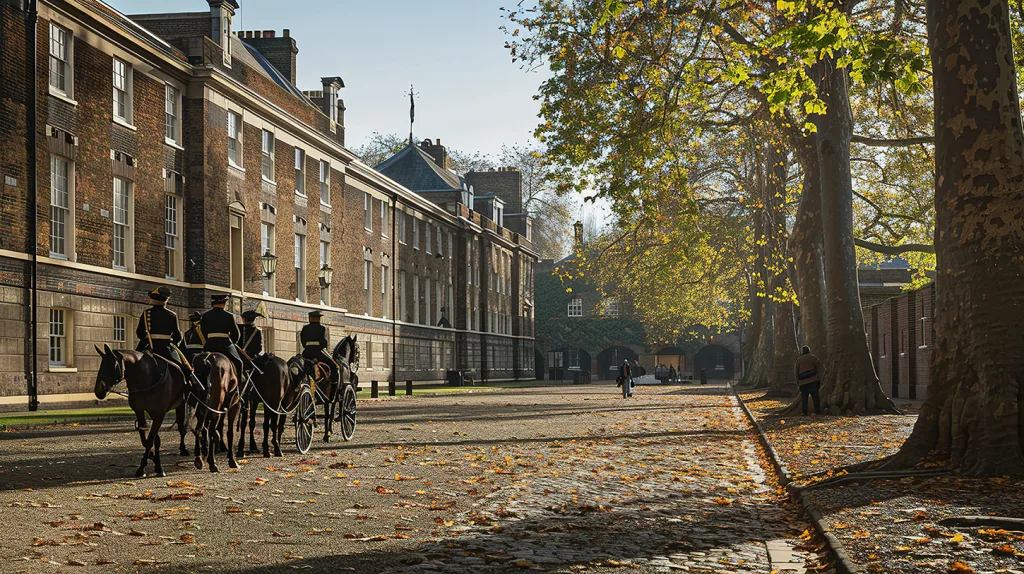


Royal Hospital Chelsea provides a home for veteran soldiers known as Chelsea Pensioners, founded in 1682 by King Charles II as a refuge for those “broken by age or war,” inspired by Les Invalides in Paris.
Sir Christopher Wren designed the original quadrangle on the site of a former theological college, with construction starting in 1682 and the first pensioners admitted in 1692 after delays due to funding issues under treasurer Lord Ranelagh; Nell Gwyn is popularly credited with urging its creation.
Expansions included additional courts (Light Horse and College) in the late 17th century, with ongoing adaptations like infirmary updates by Sir John Soane in the 19th century and Grade I listing in the 1960s; funding shifted from army deductions to Ministry of Defence grants in 1847.
Today, it houses around 300 Chelsea Pensioners in a 66-acre site, serving as a national icon through events like the Chelsea Flower Show, public tours, and Founder’s Day parades, while maintaining Wren’s Baroque architecture as a living military heritage centre.
PTSG has delivered the testing of fire and smoke dampers at Royal Chelsea Hospital since 2020. Fire and smoke dampers are located in the building’s ductwork system at any point where the ductwork breaches the fire compartment. are essential in preventing the spread of fire and smoke, and the law sets out clear rules and guidance for their inspection, testing and maintenance.
The team has developed an industry-leading fire damper inspection and testing reporting platform. It was built to comply with the standards set out in BESA Technical Bulletin VH001. While standard reporting offers a list of identified issues, our reporting goes beyond. We furnish you with comprehensive details of all tested dampers, including photographic evidence captured before, during and after testing.
If we identify any issues, we offer additional photographs and advice on remedial steps, including detailed costings.