

Craig Doig, Managing Director, PTSG Water Treatment
The cluster of Legionnaires’ disease cases now under investigation by the UK Health Security Agency in north-west and south-west London is a sobering reminder of what can happen when water system management slips down the priority list.
Legionella is not a new threat. The bacteria thrive in poorly maintained water systems – particularly where temperatures fall within the 20-45°C range, where stagnation occurs, or where there is a lack of adequate disinfection. Cooling towers, showers, spray taps and spa pools are among the most common sources of airborne dispersal. What makes outbreaks like this one particularly concerning is that, by the time cases are confirmed, significant exposure has often already occurred.
The challenge for facilities managers is that water safety compliance can appear invisible when things are going well. Monitoring is routine, results are filed and systems keep running. It is only when something goes wrong that the full weight of the responsibility becomes clear – and at that point, the consequences can be severe. Fines running to hundreds of thousands of pounds, enforced closures and lasting reputational damage are all realistic outcomes of a preventable failure.
The compliance framework is there – it needs to be followed
The UK’s regulatory framework for legionella control is well established. HSG 274 and the associated Approved Code of Practice L8 set out clear obligations for those responsible for building water systems. The expectation is not simply that a risk assessment exists on a shelf somewhere – it is that a live, actively maintained water safety plan is in place, reviewed regularly and acted upon.
This means regular temperature monitoring of hot and cold water systems, physical inspection and cleaning of storage tanks and calorifiers, a scheduled programme of showerhead descaling and disinfection and documented oversight of cooling towers where applicable.
Where specialist support is used – and for many organisations it should be – facilities managers should ensure their provider holds appropriate competencies and is affiliated with the Legionella Control Association. Compliance documentation needs to be current, not inherited from a previous contractor or left unchanged for years.
Budgets and risk
One of the most consistent patterns seen across the sector is the tendency for routine water hygiene monitoring to be quietly deprioritised when budgets tighten. It is understandable – the work is not visible, the risk feels abstract, and there are always more immediate pressures competing for resource.
This is a false economy. The cost of maintaining a proactive water treatment programme is a fraction of the cost of responding to an outbreak – whether that response involves emergency remediation, legal proceedings, or managing the reputational fallout.
Dense urban environments, where water systems are often more complex and exposure potential is higher, carry particular risk. London’s ageing infrastructure adds another layer of challenge. Buildings that have undergone changes of use, extended periods of low occupancy, or significant refurbishment work are especially vulnerable to the conditions that allow Legionella to proliferate.
Technology as a tool for faster intervention
One of the limitations of traditional water safety monitoring is the time it takes to identify a problem. Manual temperature checks are periodic by nature and laboratory analysis can take days. In a building with a complex water network, that delay creates risk.
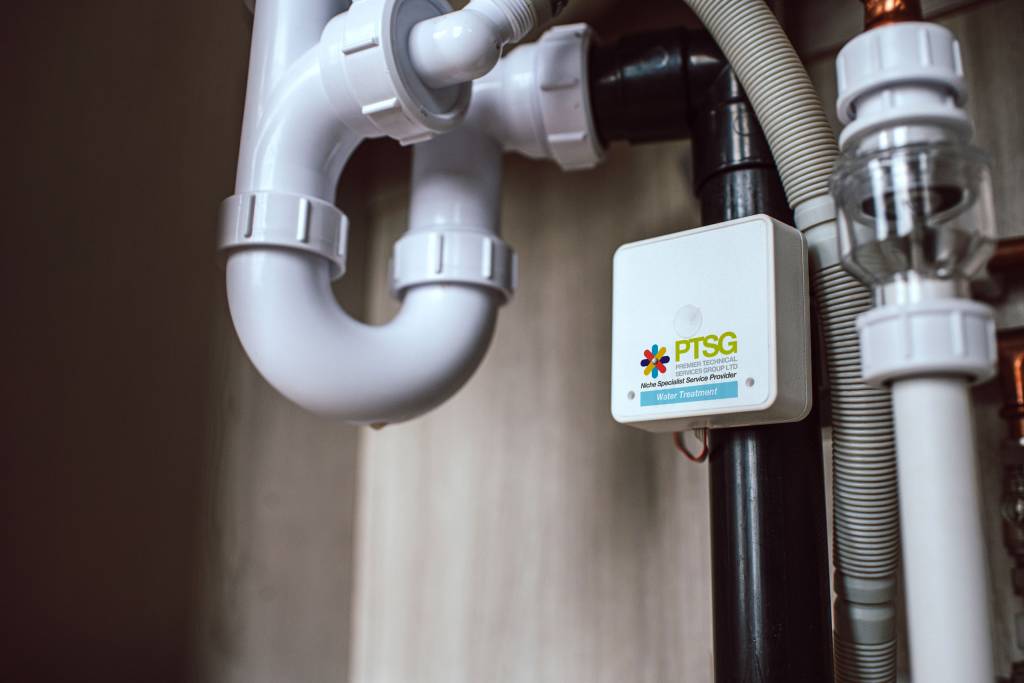
Remote monitoring technology addresses this directly. PTSG’s remote monitoring solution uses discreet sensors fitted to pipework, recording temperature data every five seconds and transmitting data to a secure cloud platform every 20 minutes 24/7/365. Alerts are delivered in real time by SMS or email, allowing engineers to identify and respond to potential issues before they escalate – without the need for a physical site visit in the first instance.
For multi-site organisations, schools, care homes, hospitals, hotels, and social housing providers, this kind of continuous oversight represents a significant step forward in how water safety is managed. It also reduces unnecessary flushing regimes and site visits, delivering meaningful savings on water, energy and operational costs.
This does not replace the need for a robust written scheme of control and regular physical inspection – but it closes the gap between scheduled visits and gives facilities managers far greater confidence that their systems are performing as they should.
What facilities managers should do now
The current outbreak in London should prompt every FM with responsibility for a building water system to ask a straightforward question: when was our water safety plan last reviewed and are we confident it reflects how our systems are actually operating today?
If the answer is uncertain, that review should happen now – not at the next scheduled audit date. Water safety is not a compliance exercise to be completed annually. It is an ongoing operational responsibility that requires consistent attention.
PTSG Water Treatment supports facilities managers across the UK in meeting their statutory obligations, from initial risk assessment and scheme of control development through to routine monitoring, remedial works and ongoing compliance management.