

Greenwich Peninsula continues to build an extraordinary collection of permanent public artworks created by a diverse group of British artists. Among the installations are Anthony Gormley’s Quantum Cloud, Alex Chinneck’s Bullet from a Shooting Star, Gary Hume’s Liberty Grip, and Richard Wilson’s A Slice of Reality.
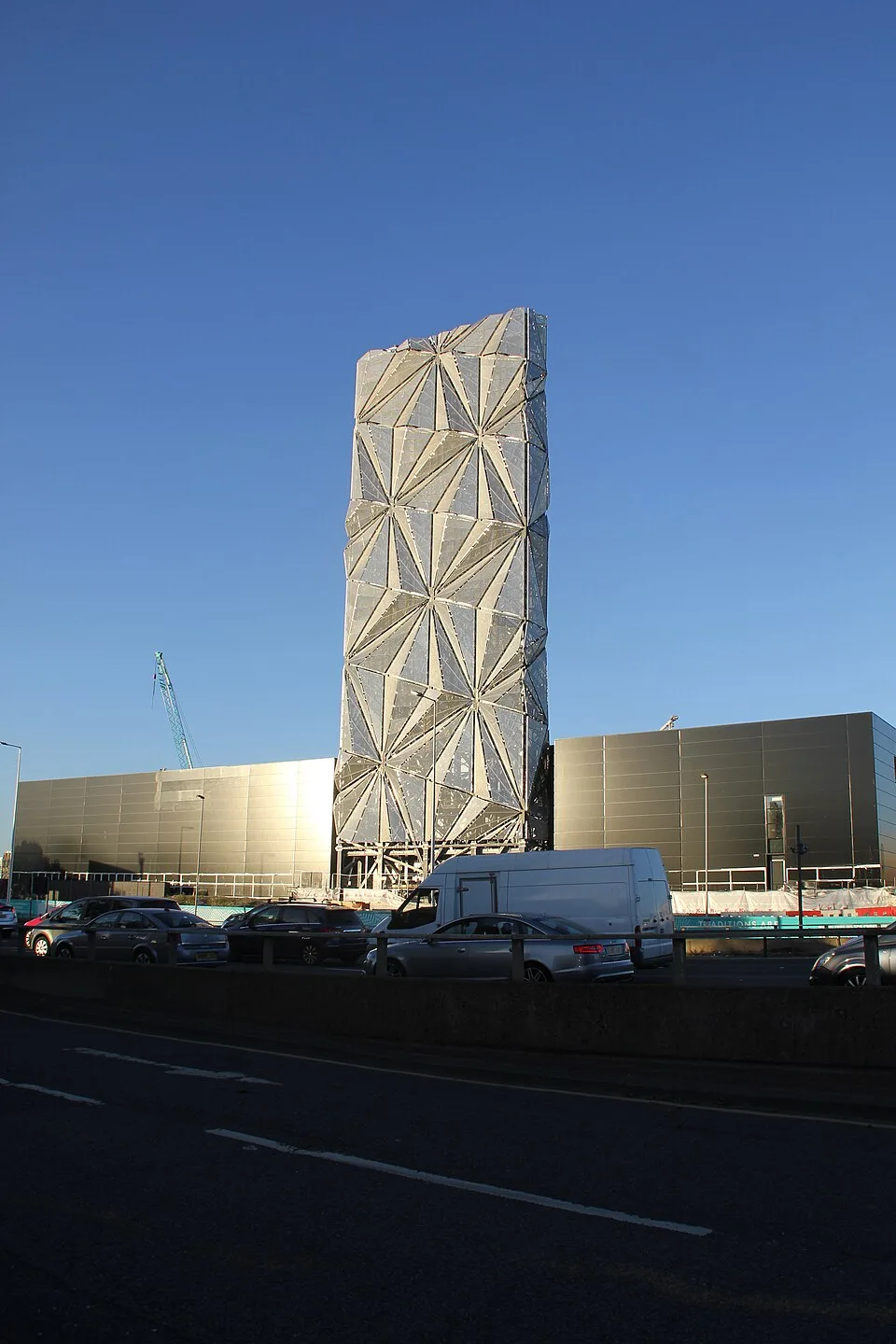
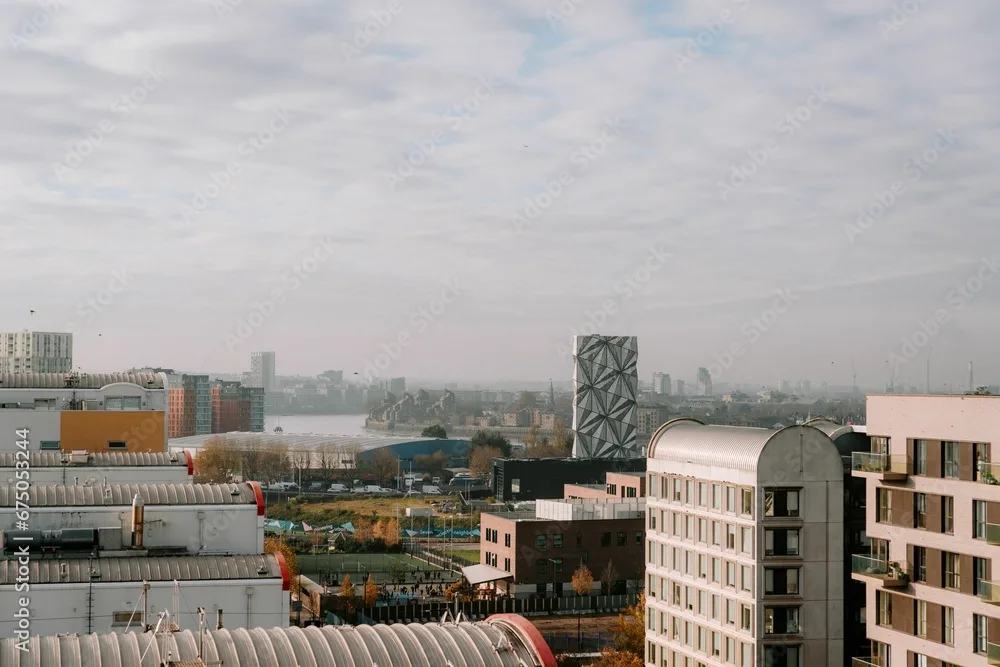
The newest addition is Conrad Shawcross’ The Optic Cloak, which has been integrated into this growing open-air gallery. The structure serves a dual purpose: it conceals the tall flues of the soon-to-be-finished Energy Centre and stands as a striking landmark for the Peninsula.
The Energy Centre itself will supply low-carbon power to more than 15,000 local homes. Its design is centred around “The Blade,” a series of 50-metre flues housed within a slim, horizontal frame. When Greenwich Council requested that the flues be visually softened or hidden, the opportunity emerged to turn this functional element into a work of public art. Several artists submitted proposals, and Shawcross’ concept was chosen for its sophistication and originality.
PTSG, via constituent company NSS, has been carrying out inspections of fall arrest equipment at The Optic Cloak since 2019. They include the inspection of a large fall arrest ladder, as well as a track-mounted abseil system.
Fall arrest ladders installed on building exteriors play a vital role in safe access and compliance—particularly for facilities management, maintenance teams and contractors. They prevent serious injuries and provide continuous protection for workings during ascent and descent.
Track-mounted abseil systems are increasingly important on modern buildings—especially those with complex façades, limited access or architectural features that make traditional access methods difficult. Their value spans safety, compliance, operational efficiency and long-term asset protection.
PTSG Access & Safety delivers unrivalled expertise in the design, testing and certification of critical access and safety equipment and systems nationwide.